
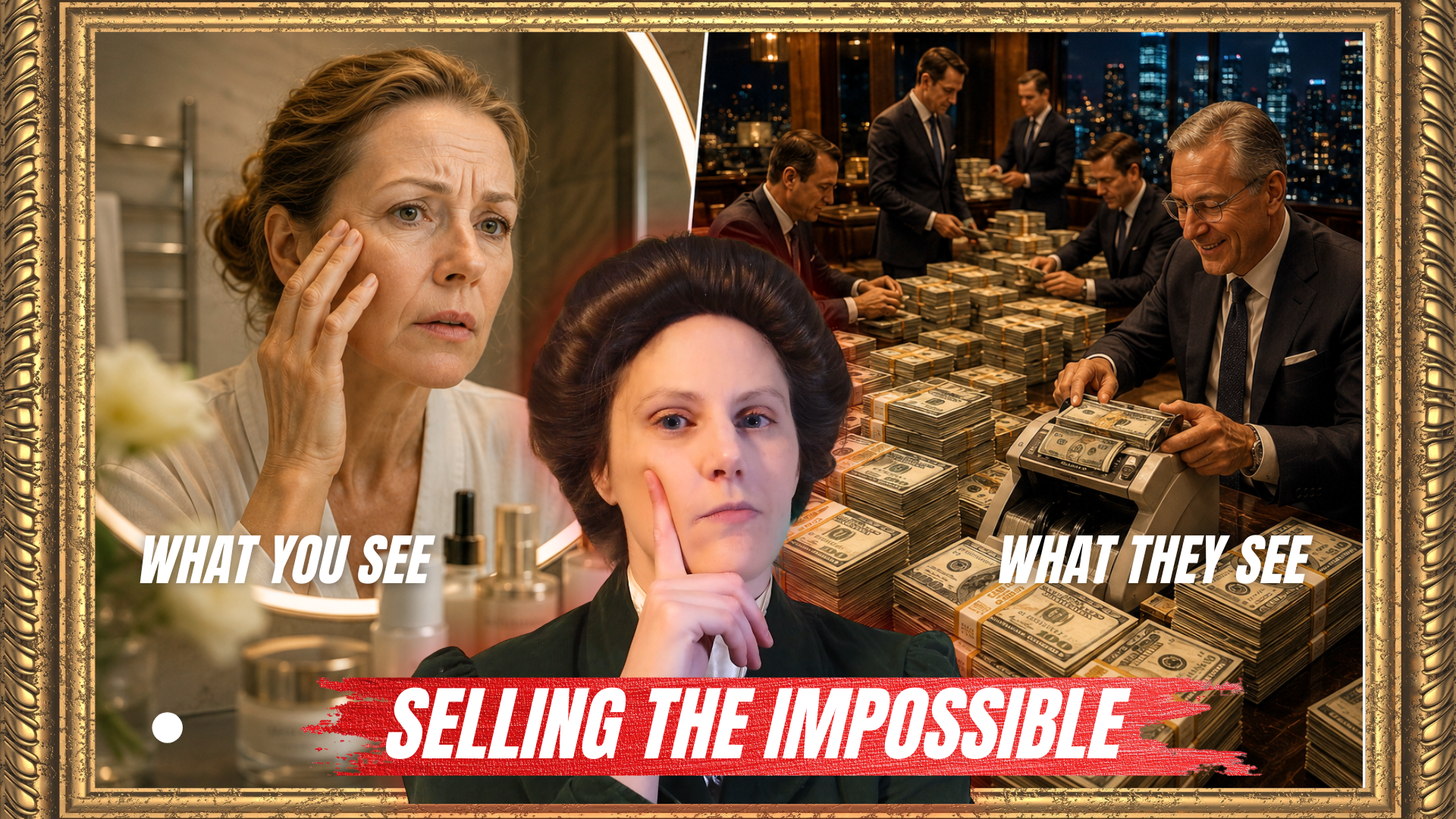
Human beings are uniquely burdened with the awareness of their own mortality. According to Terror Management Theory (TMT), when we are forced to confront the inevitability of death, aging, or a lack of purpose, we experience an acute existential anxiety that we desperately try to soothe. For over a century, the global advertising machine has recognised this vulnerability not as a psychological crisis to be healed, but as a premier commercial opportunity.
By systematically stoking our fears of physical decay, social irrelevance, and absolute erasure, major global industries have learned to manufacture a profound sense of panic—only to immediately present their own products and services as the ultimate, comforting shield.
Ethical Marketing vs. Unethical Exploitation
To be clear: not all advertising is inherently evil. Marketing simply refers to the activities a brand uses to promote its services and build awareness. Ethical advertising builds long-term public trust by remaining honest, respectful, and transparent—sharing clear pricing and real facts without relying on manipulation. (Here in Australia, a brand like Bunnings often comes to mind).
Unethical advertising, on the other hand, relies on deception, hidden costs, and psychological manipulation to drive quick sales. It systematically exploits our deepest subconscious vulnerabilities. The difference always comes down to intent and truth.
With that distinction in mind, let’s look at 11 major industries known for questionable marketing tactics, and how they weaponise your death anxiety to profit off your existential dread.
“By systematically stoking our fears of physical decay, social irrelevance, and absolute erasure, major global industries have learned to manufacture a profound sense of panic—only to immediately present their own products and services as the ultimate, comforting shield.”
11 Industries Profiting From Your Fear of Death
1. The Anti-Aging & Longevity Industry
The global anti-aging sector operates by framing the natural biological process of growing older as an aggressive, technical failure of self-care. By expanding its reach from standard wrinkle creams to high-tech “prejuvenation” and cellular biohacking, the industry targets increasingly younger demographics, convincing people in their twenties that their bodies are already in a state of active decay.
AI skin-analysis apps and clinical vocabulary uncover microscopic flaws that would otherwise pass unnoticed, creating an urgent, expensive surveillance routine. By pairing scary statistics about environmental toxins with serums and supplements, brands position their products as an insurance policy for your DNA—offering a temporary, costly illusion of control over biological decay.
2. Insurance & Financial Services
The financial sector leverages intense existential guilt by forcing consumers to confront the absolute unpredictability of sudden death and disaster. Heavy-handed “fear-appeal” marketing paints vivid, catastrophic scenarios of fatal illnesses or economic ruin paired with images of vulnerable spouses or children left behind.
Once this acute anxiety is triggered, the industry reframes a sterile financial policy into an act of deep parental love and moral responsibility—selling consumers a way to dictate security for their loved ones from beyond the grave.
3. The Wellness & Diet Industry
The modern wellness movement has elevated diet and lifestyle choices into a high-stakes battle for survival. Marketing strategies routinely depict the modern world as a toxic wasteland filled with invisible threats, implying that standard grocery store choices actively accelerate your demise.
By heightening the fear of chronic disease and bodily vulnerability, these brands transform everyday eating into a ritualistic defense mechanism, promising that adhering to bio-optimized cleanses or restrictive regimens will allow you to opt out of human mortality.

4. The Tech & AI “Grief Tech” Sector
Emerging digital legacy platforms directly monetise our deep-seated dread of insignificance and absolute erasure. As voice cloning and artificial intelligence accelerate, companies promote “digital immortality”—warning against the tragedy of fading memories and future generations forgetting your voice.
By offering to compile an individual’s personality into an interactive, AI-driven avatar that can read bedtime stories to great-grandchildren decades later, they turn symbolic immortality into a monthly recurring tech subscription.
5. The Survivalist & Private Bunker Industry
Once a fringe market, luxury underground bunkers have become a mainstream phenomenon by capitalizing on systemic dread surrounding supply chain failures, geopolitical conflict, and climate collapse.
Gritty, cinematic advertisements force viewers to imagine their absolute vulnerability when the electrical grid fails. The industry isn’t just selling heavy-duty gear and water filtration; it is selling a psychological buffer that promises you can survive the literal end of civilization while others perish.
6. Cryonics & Radical Life Extension
The cryonics sector targets the ultimate terror: the absolute finality of death and the complete void of non-existence. Companies explicitly reframe deceased clients as “patients” merely resting in “cryonic suspension.”
Employing a clinical spin on Pascal’s Wager, marketers argue that while burial guarantees a 0% chance of survival, freezing remains in liquid nitrogen yields a chance greater than zero. They transform an unproven procedure into a logical gamble for a second chance at life.
7. Security, Defence & “Smart Home” Tech
Smart home security brands sell products by intentionally heightening a consumer’s perception of local danger. Nighttime camera footage of masked lurkers feeds into “Mean World Syndrome,” systematically convincing viewers that their peaceful streets are constantly under siege.
By framing the home as a fortress under constant threat, these subscription ecosystems offer relief from a manufactured panic, selling a fragile sense of absolute physical safety.
8. Funeral & “Death Care” Industry
Operating within the acute window of grief, the funeral industry historically relied on subtle guilt-based emotional tiering—equating rare woods and “hermetically sealed” caskets with the depth of a family’s love.
Today, the sector pivots toward aggressive “Pre-Need Planning” insurance mailers aimed at aging adults, urging them to organize their burials so they don’t leave children with a post-mortem financial burden. It converts the abstract terror of mortality into a tidy, responsible administrative checklist.

9. Multi-Level Marketing (MLM) & Gig Economy Recruitment
While MLMs outwardly sell consumer products, their true commercial engine is recruitment—targeted squarely at anxieties surrounding the meaning of life. By critiquing the traditional 9-to-5 as a soul-crushing waste of finite time, they sell hyper-optimistic “lifestyle marketing” promising “true purpose.”
They weaponise the passage of time to make prospects dissatisfied with their realities, selling an instant community and a manufactured sense of grand entrepreneurial meaning.
10. High-End Real Estate & “Legacy” Architecture
Luxury property markets move far beyond selling square footage; they market permanence as an antidote to absolute erasure. Built squarely around the word “Legacy,” promotional campaigns highlight enduring materials like granite, marble, and oak—elements designed to withstand centuries.
Copy explicitly invites affluent buyers to “cement their place in history,” convincing them that they can successfully transfer their identity into permanent stone monuments long after their physical bodies fail.
11. Academic & Corporate “Credentialism”
The endless pipeline of executive coaching, mid-career certifications, and university degrees operates by stoking panic about becoming obsolete. Using rapid shifts in AI and automation, campaigns aggressively prompt reflection on fading authority with questions like: “Are you leading, or are you being left behind?”
By exploiting the mid-life realization that professional time is a diminishing resource, these programs position expensive bootcamps as a fountain of professional youth.
Becoming Death Literate: Breaking the Loop
Death literate people are significantly harder to sell to. When we look beneath the surface of modern advertising, it becomes clear that many of our largest economic engines are fueled by our collective refusal to accept death as a normal, natural part of life.
Corporations have commodified our deepest existential anxieties, transforming a shared human reality into a series of monthly subscriptions and premium upgrades. These campaigns do not fix our fear of mortality; they merely offer a temporary, expensive illusion of control.
By recognizing these marketing loops for what they truly are, we strip them of their psychological power. Face the discomfort, protect your mind, and go talk death.
Advanced Care Workbook
A meticulous guide for cleanly and legally documenting personal and medical values before transitions occur.
Access Digital Workbook →Death Literacy Checklist
An actionable diagnostic tool designed for individuals and workplace teams to gauge existential readiness.
Download Free Audit →
Leave a Reply