
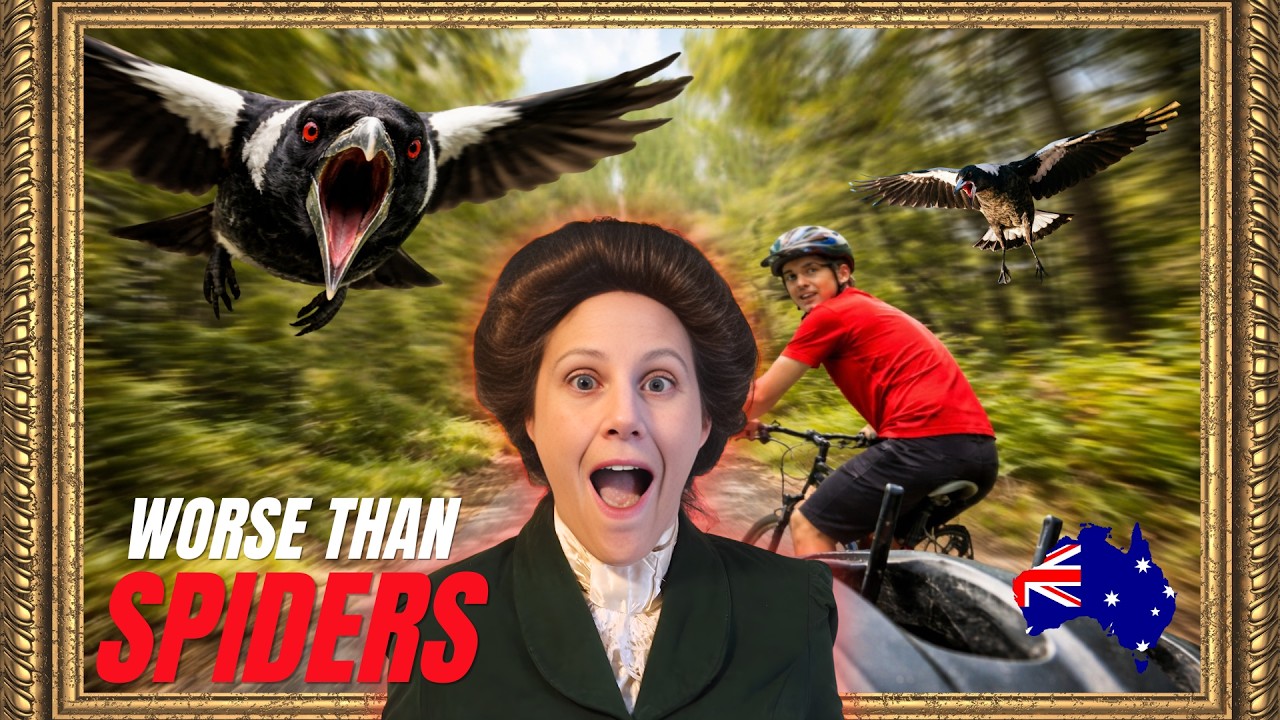
Australia has a reputation for being a total death trap. Sharks, crocs, spiders, snakes. Tourists arrive half-expecting to be eaten the moment they step off the tarmac. But here’s the thing: the animals that Australians actually fear the most are almost never the ones doing the killing. The animals that actually kill us are embarrassingly mundane.
We post death-related videos every Friday, so if that sounds like your kind of thing, consider subscribing to the channel. Now, let’s talk deadly Australian animals.
Australia has more venomous species than anywhere else on Earth. That’s not a myth. But “venomous” and “deadly” aren’t necessarily the same thing. And somewhere along the way, people started to confuse sheer, visceral fear with actual statistical risk.
So today, we’re running the two lists side by side—the most feared, and the actual killers—and seeing how badly you’ve all been misled.
The Most Feared (What Tourists Think Will Kill Them)
Ask most international visitors to name Australia’s deadliest animals, and you’ll get a very predictable list. Sharks, crocs, box jellyfish, funnel-web spiders, eastern brown snakes, blue-ringed octopuses, stonefish, redback spiders, tiger snakes, cassowaries.
On paper, fair enough. These animals are genuinely dangerous. Some have venom that can kill in minutes. Some have enough bite force to remove a limb. A cassowary can kick you open like a can opener.

And yet, in any given year, how many Australians do these animals actually kill?
- Sharks: Around 2 to 4 fatal attacks annually.
- Crocs: 1 to 2.
- Box Jellyfish: Maybe 2.
- Funnel-Web Spiders: Zero. The last recorded death was in 1981, before antivenom existed.
- Eastern Brown Snakes: 2 to 4.
- Blue-Ringed Octopus: 2 confirmed deaths in Australia’s colonial history.
- Stonefish: Zero recorded Australian fatalities in modern records.
- Redback Spiders: Zero since antivenom.
- Cassowaries: One confirmed human death ever, in 1926.
Snakes as a whole account for roughly 2 to 4 deaths per year across all species combined. That’s it.
You are more likely to be killed by stubbing your toe and cracking your skull on a barbecue.
What Australians Actually Fear
Here’s the thing about the tourist fear list: it was written by people who don’t actually live here. Ask any actual Australian what animal makes their blood run cold, and you’ll get a very different answer.
Magpies
Every Australian has a magpie story. From August to November, “swooping season” turns suburban streets into an absolute gauntlet. These birds are intelligent, territorial, and they remember faces—specifically your face—and they will find you again.

Cyclists wear zip ties pointing out of their helmets. Parents walk kids to school with their arms raised. The website Magpie Alert logged over 3,500 attacks in a single season. People have lost eyes. A toddler in Queensland died in 2021 after being startled by a swooping magpie and falling.
They’re no joke, and they are a serious scheduling problem. And yet, outside of those months, they’re actually lovely creatures. (Swooping plovers and butcher birds also get an honorable mention. Same energy, smaller fan base.)
Drop Bears
Yes, the drop bears. But firstly, they don’t live in the cities. I don’t know why international folks think that. Much like koalas, they live in trees, and there aren’t many trees in cities.
They are a big problem for bushwalkers and those living in bushland regions because they live up in the canopies and drop onto prey from a height. Locals know to look up when they stop to rest. Tourists don’t. The official advice is to spread Vegemite behind your ears or on your nose as a deterrent. The strong aroma is usually enough to keep them away.
Huntsman Spiders & Bin Chickens
Next are Huntsman spiders, who don’t make the international fear list because they’re not particularly venomous. They make the Australian fear list because one will appear on your car’s sun visor when you’re going 100 km/h down the highway, and you will drive straight into a ditch. Cause of death? Technically the ditch. Morally? The spider.
And finally, “bin chickens” (the Australian White Ibis). Nobody fears them, and yet they are everywhere, and they are bold, and they will take food directly from your hand with the dead-eyed confidence of something that has fully abandoned the social contract. No recorded fatalities yet, but it does feel like only a matter of time.
The Actual Killers (What’s Putting Us in the Ground)
So, if it’s not the animals on the tourism posters, what’s actually putting Australians in the ground? It reads like a rural insurance claim, not a wildlife documentary.
Horses & Cattle
Horses kill more Australians per year than any other animal—around 5 on average, mostly from falls or being thrown. They are in every state, ridden by people of all ages, and they weigh half a ton.

We have normalized the risk entirely. Helmets are compulsory in some venues and optional in others. We regulate car seats for children, but put kids on a thousand-kilo animal with minimal safety gear and call it character building.
Cattle produce similar numbers: kicks, crushes, trampling. Farmers and rodeo workers are particularly exposed, and absolutely no one is making a dramatic documentary series about that.
Bees, Wasps & Dogs
Bees and wasps account for around 2 to 5 deaths annually from anaphylactic shock. Anaphylaxis is the great equalizer. An insect the size of a thumbnail can kill a full-grown adult in under half an hour. Allergic reactions are completely unpredictable. You can be stung 50 times without any incident and die on the 51st sting. People with known allergies routinely don’t carry their EpiPens. That’s a fixable problem that we mostly just haven’t fixed.
Dogs account for 1 to 2 deaths per year, mostly children. Australia euthanizes tens of thousands of dogs annually for aggression, and we still lose people. Go figure.
Kangaroos (Letting Physics Do the Rest)
Kangaroos don’t usually rack up fatalities from direct attacks, but from car collisions. They cause hundreds of accidents a year and multiple deaths.
The roo doesn’t mean to kill you. It just exists at exactly bonnet height on a dark road, stares into your headlights with complete philosophical detachment, and lets physics do the rest.
And before you feel too sorry for them, a large male red kangaroo stands at 2 meters tall, weighs 90 kilos, and can disembowel a dog with one kick. They’re not helpless. They’ve just decided that cars aren’t worth the effort.
The Stingray Beef & The Great Emu War
Stingrays are not on anyone’s fear list. They’re flat. They’re shy. They spend most of their time doing nothing on the seafloor. Globally, fatal stingray strikes are extraordinarily rare.
And then in 2006, one of them took out Steve Irwin, the one man on Earth who seemed genuinely unkillable. A bloke who wrestled crocodiles for fun and treated venomous snakes like a mildly rude house guest… gone to a stingray. Australia has had a beef with the stingray ever since. It’s tense. We’re currently in negotiations, but nothing’s been resolved. And frankly, the stingray doesn’t seem to be all that interested in a settlement.
And where to start with the Emus? They can’t fly. They have no natural predators in Australia. They are essentially large, aggressive feather tubes with the problem-solving ability of a middle manager and absolutely no fear of consequences. They mostly cause property damage and vehicle collisions rather than direct fatalities.
But in 1932, the Australian government decided that enough was enough and deployed actual soldiers with machine guns to cull them. The emus won decisively. The military withdrew in embarrassment after 11 days. So naturally, in 1948, Australia tried again. Same result. We lost to the same bloody bird twice with guns.
The emus have never acknowledged the conflict. They were just standing around being emus, and two separate governments declared war on them, and both went home quietly. They have been here long before people, and they’ll be here long after we’re gone, standing in the middle of the road, staring at nothing, completely unbothered.
Why Are We So Wrong?
This isn’t accidental. Our brains are wired to fear things that *look* dangerous. Things with fangs, venom, and prehistoric menace. There’s even a psychological concept for it: we judge the likelihood of something by how easily an example comes to mind.
Shark attacks are constantly in the headlines. “Man thrown from horse” makes page 12 in the local newspaper.
The tourism industry hasn’t helped. “Australia, where everything wants to kill you” runs itself as a marketing line. Every international travel article lists the funnel-web spider, the eastern brown, the box jellyfish. No one’s clicking on a story about bees.
Media logic does the rest. A crocodile death is a massive story. A horse riding accident is a tragedy, but it doesn’t go viral. So, the crocodile ends up with the lethal reputation, and the horse wins a ribbon at the Royal Easter Show.
The Animals That Actually Deserve More Respect
The Eastern Brown snake genuinely earns its reputation. It’s responsible for more snakebite deaths than any other species in Australia. It’s common in both suburban and rural areas. It’s fast, and unlike many snakes, it doesn’t retreat. It escalates. If there’s one animal on the feared list that belongs there, it’s this one.
Bees and wasps deserve dramatically more caution than they get. Your first anaphylactic reaction will happen without warning.
Magpies deserve formal recognition as a public health issue. Swooping season causes real injuries every year and receives about the same institutional attention as a minor pothole. Meanwhile, there are national strategies for an animal that hasn’t killed anyone since the 1920s.
And the drop bear… look, all we’re saying is: Vegemite behind the ears. Don’t look up into the canopy for too long. And if you hear something move in the gum trees above you, walk. Don’t run. Running will trigger the instinct.
The gap between the animals we fear and the animals that actually kill us is enormous. And it’s not random. It’s a product of how dramatic something looks versus how often it actually causes harm.
Snakes look like death. Horses look like pets. Bees look like, well, bees. And magpies look like a bird until it takes your eye out on the way to work.
None of this means you should be swimming with sharks or handling an Eastern Brown. Respect the dangerous ones. But if you spend time around horses, cattle, bees, or—and we cannot stress this enough—if you travel through magpie territory between August and November during a holiday, that’s where your caution should actually live.
So here’s the question for the comments: Which animal do you think gets the least respect but is an actual genuine threat? Drop it below.
Let’s talk death.
Equip yourself and your family with organized frameworks before a crisis limits your choices.
Advance Care Workbook
Step-by-step professional guidance for cleanly and legally documenting your final medical and personal wishes.
Get the Workbook →Death Literacy Checklist
A simple, actionable self-assessment tool designed for individuals navigating complex healthcare and institutional systems.
Download Free Tool →
Leave a Reply